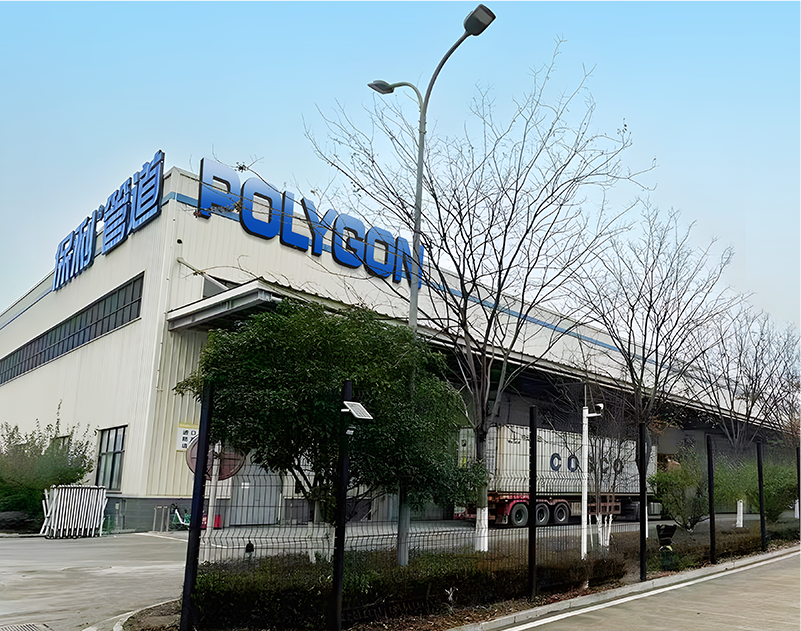

Introduction
Modern plumbing systems rely on strong and reliable pipe connections to deliver water safely. Pipes alone cannot create a complete network. They must turn, branch, and connect with other components. This is where PPR Fittings become essential. Made from polypropylene random copolymer, they provide durable and leak-resistant connections in plumbing, HVAC, and industrial systems. In this article, you will learn the different types of PPR Fittings and how each type supports efficient pipe routing, balanced water distribution, and long-term system performance.
The Main Types of PPR Fittings and Their Practical
Uses
PPR Elbow Fittings for Changing Pipeline Direction
PPR elbow fittings redirect pipe flow when the pipeline must turn around obstacles or follow building layouts. They are commonly manufactured in 45-degree and 90-degree angles, allowing installers to guide pipelines through walls, ceilings, or floor spaces. These elbows maintain smooth water movement and help reduce turbulence during directional changes. In both residential and industrial installations, elbows enable efficient pipe routing while keeping the overall system compact and organized.
PPR Tee Fittings for Branching Water Distribution Lines
PPR tee fittings create branch connections in a pipeline system. Their T-shaped structure allows one pipe to divide into two directions or combine flow into a single line. Equal tees maintain the same pipe diameter across all outlets, while reducing tees connect smaller branch pipes to a larger main pipeline. These fittings are widely used in building plumbing, irrigation networks, and water distribution systems where multiple outlets must receive water from a central supply line.
PPR Couplings for Extending and Repairing Pipelines
PPR couplings connect two pipes in a straight line, making them one of the most frequently used fittings in piping installations. They are essential when extending pipelines across long distances or repairing damaged pipe sections. Because couplings match the pipe diameter exactly, they ensure a stable and leak-free connection. In construction projects, installers often use couplings to join multiple pipe segments quickly while maintaining consistent system alignment and flow continuity.
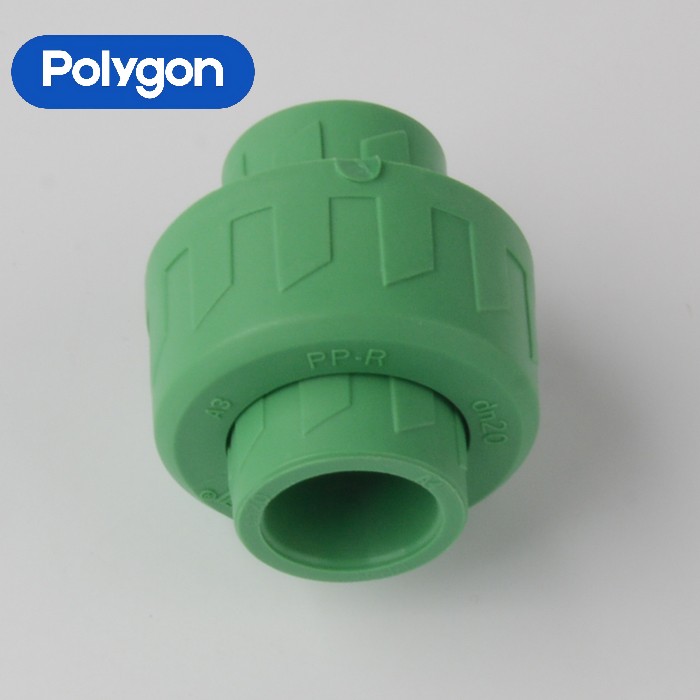
Direction-Changing PPR Fittings in Plumbing System Design
45-Degree PPR Elbows for Smooth Flow Redirection
In pipeline engineering, a 45-degree elbow is widely used to guide fluid flow through gradual directional changes. Compared with a sharp 90° turn, this design allows smoother water movement and helps maintain hydraulic stability. The structured overview below summarizes its structure, applications, technical characteristics, and installation considerations commonly used in professional piping systems.
90-Degree PPR Elbows for Compact Plumbing Layouts
The 90-degree elbow is widely used when pipelines must turn sharply within tight installation spaces. This fitting is common in wall corners, ceiling installations, and equipment connections. Despite the sharp turn, well-designed PPR elbows maintain strong flow performance and structural stability. Their compact shape makes them essential in complex plumbing layouts where space constraints require precise directional changes.
Pipe Bridge or Cross-Over Fittings for Avoiding Pipe Intersections
Pipe bridge fittings, also called cross-over fittings, allow one pipe to pass over another without direct intersection. This design prevents pipeline collision in dense installations where multiple pipes run close together. In large mechanical rooms or commercial buildings, cross-over fittings help maintain clean and organized pipe routing. They also simplify maintenance because pipes remain accessible without interference from other lines.
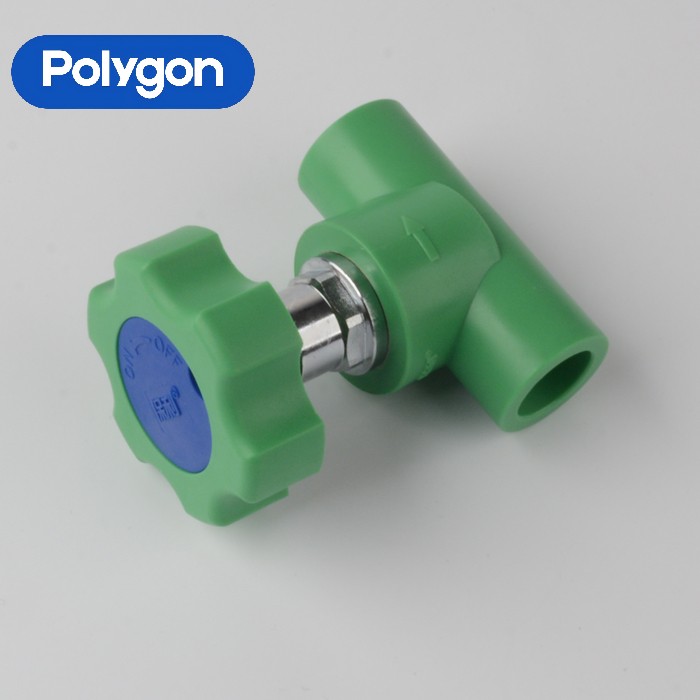
Connection-Focused PPR Fittings for Secure Pipe Integration
Standard PPR Couplings for Straight Pipe Connections
Standard PPR couplings are designed for linear pipe extension and are typically manufactured to match the outer diameter of common pipe sizes such as 20 mm, 25 mm, 32 mm, and 40 mm. During installation, both pipe ends are heated with a fusion tool and inserted into the coupling socket to create a molecular bond. This heat-fusion process forms a uniform joint with strength comparable to the pipe itself. Proper alignment during welding is essential because even slight angular deviation can affect flow direction and reduce long-term joint stability.
PPR Union Fittings for Detachable Pipe Connections
PPR union fittings combine heat-fusion sockets with a central threaded nut that allows repeated assembly and disassembly. This structure enables technicians to remove equipment without cutting the pipeline. Unions are commonly installed near pumps, water meters, and filtration devices where periodic inspection is required. When selecting a union, engineers typically match the pressure class with the pipeline system, such as PN20 for building water supply networks. Proper tightening torque ensures leak-free sealing while still allowing convenient future disassembly.
PPR Threaded Connectors for Hybrid Plumbing Systems
Threaded connectors are used where PPR pipelines must interface with metal components such as valves, boilers, or mechanical equipment. These fittings usually contain brass threaded inserts molded into the PPR body to provide mechanical strength and corrosion resistance. During installation, thread sealing tape or sealant helps ensure tight connections. Correct alignment prevents stress concentration at the transition point and helps maintain long-term system stability.
Flow Distribution and Branching with PPR Fittings
Equal Tee PPR Fittings for Balanced Flow Distribution
Equal tee PPR fittings are designed to divide a main pipeline into two branches of identical diameter, ensuring consistent hydraulic balance within the system. Because the inlet and outlets share the same size, the water velocity remains relatively stable when the flow splits. In building plumbing design, engineers often install equal tees in horizontal distribution lines supplying bathrooms, kitchens, or utility rooms. Proper placement helps maintain uniform pressure at multiple outlets while simplifying pipe routing and reducing the need for additional transition fittings.
Reducing Tee PPR Fittings for Multi-Diameter Branch Systems
Reducing tee fittings are used when a smaller branch line must connect to a larger supply pipeline. This configuration allows the system to maintain strong flow capacity in the main line while distributing water efficiently to secondary pipelines. Designers often apply reducing tees in commercial buildings where large risers feed smaller floor distribution pipes. The gradual change in diameter helps maintain stable flow velocity and avoids abrupt hydraulic changes that could affect pressure balance in the network.
Cross Tee PPR Fittings for Complex Multi-Direction Systems
Cross tee fittings provide four outlet directions from a single junction, allowing water to distribute to multiple pipelines simultaneously. They are typically installed in centralized distribution points such as mechanical rooms or equipment areas. Because several pipelines connect at one point, engineers must consider pressure balance and flow direction when using cross fittings. When properly positioned, they simplify complex pipe layouts and reduce the number of individual fittings required in multi-branch plumbing systems.
Flow Control Components Within PPR Fittings Systems
PPR Ball Valves for Reliable Water Shut-Off
PPR ball valves are designed for rapid shut-off and long service life in water supply systems. The internal spherical ball usually rotates 90 degrees to open or close the flow path, allowing immediate control during maintenance or emergencies. Most PPR ball valves support pressure classes such as PN16 or PN20 and operate effectively in hot water systems up to about 95 °C. Their full-bore design minimizes pressure loss, making them suitable for residential plumbing, heating circuits, and distribution manifolds.
PPR Stop Valves for Section Isolation in Plumbing Networks
Stop valves provide localized flow control within complex piping networks. They are commonly installed near branch lines, equipment connections, or floor distribution manifolds to isolate a specific section of the system. In multi-story buildings, engineers often position stop valves at key vertical risers so maintenance can occur without shutting down the entire water supply. Proper placement improves maintenance efficiency and ensures technicians can inspect pipelines, replace components, or flush sections of the system safely.
Pressure Control Valves in PPR Piping Systems
Pressure control valves stabilize water pressure within PPR piping networks, especially in systems supplied by pumps or elevated tanks. These valves regulate downstream pressure to a preset level, helping prevent excessive stress on pipes and fittings. In tall buildings, pressure control valves are often installed on lower floors where hydrostatic pressure becomes higher. Maintaining stable pressure improves flow balance across the system and protects sensitive equipment such as water heaters, meters, and filtration units.
Structural and Support Components Used with PPR Fittings
PPR Pipe Clips for Securing Pipes to Walls and Ceilings
Pipe clips are essential for maintaining correct pipe positioning and preventing mechanical stress in a PPR piping system. Engineers typically determine clip spacing based on pipe diameter and operating temperature because thermal expansion increases with heat. For example, horizontal PPR pipes with diameters around 20–32 mm often require supports every 0.5–0.7 meters. Properly installed clips reduce vibration, prevent pipe sagging, and maintain consistent alignment, which helps protect heat-fusion joints and improves long-term structural stability in plumbing and HVAC installations.
Saddle Clamps for Adding Branch Connections Without Cutting Pipes
Saddle clamps provide an efficient method for adding outlets to an existing pipeline without interrupting the entire system. The clamp body tightly fits the pipe surface and includes a threaded or fusion outlet for connecting branch lines. This design is particularly useful in irrigation networks and water distribution systems where new supply points must be added quickly. Proper installation requires accurate drilling and sealing to maintain system pressure. When correctly installed, saddle clamps enable flexible system expansion while maintaining reliable fluid flow.
PPR Flange Adaptors for Equipment and Pump Connections
Flange adaptors create a secure interface between PPR pipelines and heavy mechanical equipment such as pumps, storage tanks, and industrial valves. These fittings combine a PPR socket connection with a standardized flange plate that aligns with metal flange systems. Bolted connections distribute mechanical load evenly and allow equipment removal without cutting pipes. In large industrial piping systems, flange adaptors also improve maintenance efficiency because pumps or valves can be replaced while the main pipeline remains intact and properly supported.
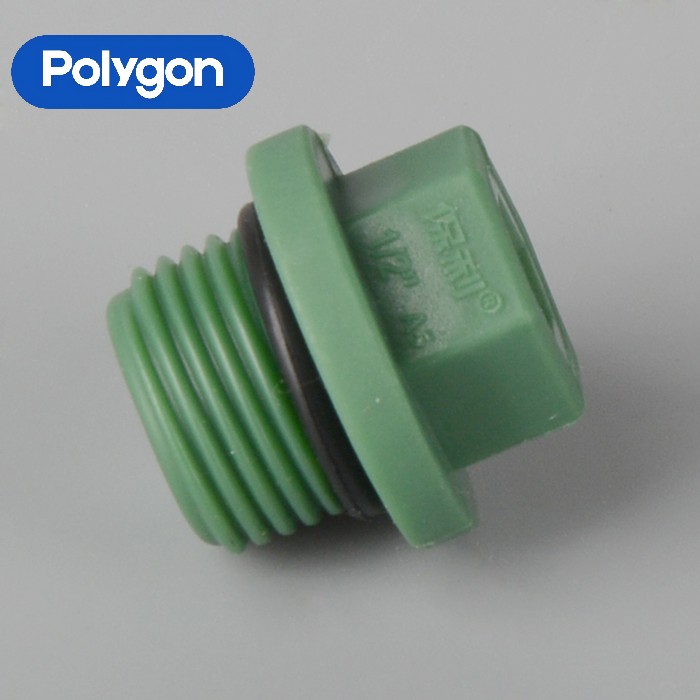
How to Select the Right PPR Fittings for Different Applications
Matching PPR Fittings to Pipe Size and System Design
Correct fitting selection begins with accurate pipe dimension planning. PPR piping systems typically follow standardized outside diameters such as 20 mm, 25 mm, 32 mm, 40 mm, and 50 mm. Designers must ensure fittings match the pipe’s outer diameter and the selected SDR (Standard Dimension Ratio), which determines wall thickness and pressure capacity. Proper alignment between pipe size, fitting socket depth, and welding parameters improves joint strength and reduces installation errors. In complex building layouts, engineers often create detailed pipe routing drawings to confirm that every elbow, tee, and reducer corresponds precisely to the required pipe dimensions.
Considering Pressure Ratings and Temperature Requirements
System pressure and operating temperature directly influence the selection of PPR fittings. Common pressure classes include PN16, PN20, and PN25, where the value represents the nominal pressure rating in bars at 20 °C. Hot water supply and heating systems often operate at temperatures between 60 °C and 70 °C, requiring fittings designed to maintain long-term strength under thermal stress. Engineers must also consider pressure fluctuations caused by pumps or vertical risers in multi-story buildings. Choosing fittings with appropriate pressure ratings ensures stable flow conditions and maintains structural integrity throughout the piping system.
Conclusion
Piping systems rely on more than pipes alone. PPR Fittings guide direction, distribute water, and control flow across modern plumbing networks. Choosing the right elbows, tees, couplings, reducers, and valves ensures efficient pipe routing and stable system performance. High-quality fittings also support durability and long service life. POLYGON provides dependable PPR fittings engineered for strength, precision, and reliable sealing, helping engineers and contractors build safe, efficient, and long-lasting piping systems.
FAQ
Q: What are PPR Fittings used for?
A: PPR Fittings connect, branch, and control water flow.
Q: Why are PPR Fittings common in plumbing?
A: PPR Fittings resist heat, pressure, and corrosion.
Q: What types of PPR Fittings exist?
A: Common PPR Fittings include elbows, tees, reducers.
Q: How do PPR Fittings connect pipes?
A: Most PPR Fittings use heat fusion joints.
Q: Are PPR Fittings suitable for hot water?
A: Yes. PPR Fittings handle hot and cold systems.
Q: How long do PPR Fittings last?
A: Quality PPR Fittings can last over 50 years.
Related Articles

The 25th Anniversary Celebration of Akan Enterprise
The 25th Anniversary Celebration of Value · Growth by Akan Enterprise Group and the Full-Scene Launch Conference of Concealed Aesthetics was Successfully Held On December 7.

The China-Indonesia Strategic Coordination Summit concluded successfully in Shanghai, jointly ushering in a new era of bilateral cooperation
Shanghai News — As the crisp autumn air brings a refreshing breeze, the banks of the Huangpu River once again host an international gathering. On the afternoon of 18 October, the China-Indonesia Strategic Synergy Development Summit was grandly convened in Shanghai. This summit aimed to deepen strate
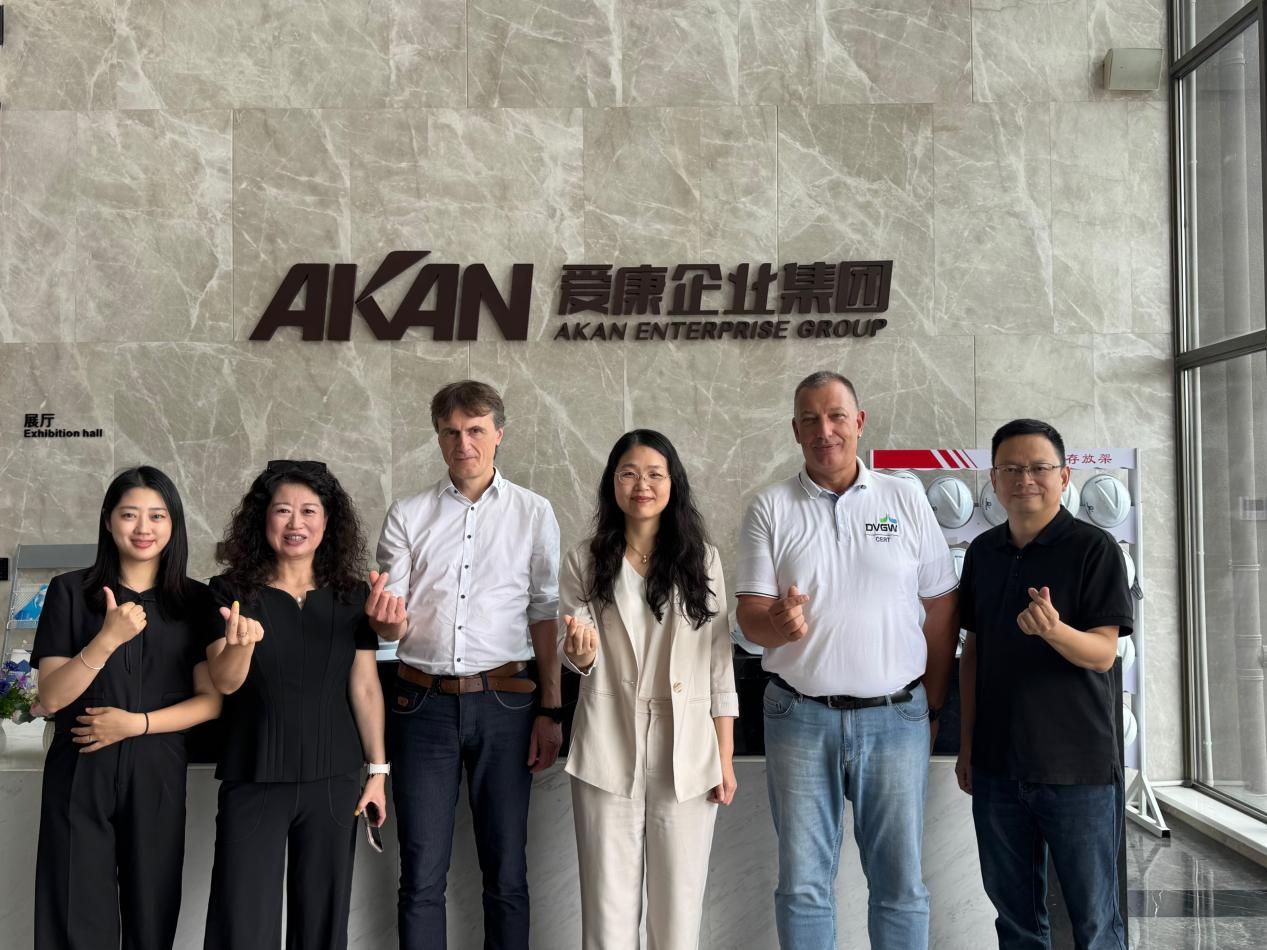
DVGW Representatives Visit AKAN Group’s Zhejiang Base for In-Depth Exchange
September 16, 2025 – Huzhou, Zhejiang – A delegation from Germany’s DVGW CERT GMBH, led by Mr. Werner Kinnen, Head of DVGW CERT GMBH, and Mr. Italo Pezzutto, Technical Expert for Water, Gas, and UBA Water Quality, together with Ms. Coco Wang, General Manager of Shanghai Zechang Business Consulting Co., Ltd., visited the Zhejiang base of AKAN Group for an on-site inspection and in-depth discussions. They were warmly welcomed by Mr. Zheng Wei, Deputy General Manager of AKAN Group, and Mr. Qiu Qiaoping, Head of the R&D and Technology Department. Both sides engaged in extensive discussions on technological innovation, product quality, and future cooperation, followed by a certificate award ceremony and a tour of the production facilities.

PPR Vs PVC: The Scientific Selection And Performance Revolution in Water Supply Piping System
In China's residential and engineering markets, PPR pipes play a vital role in water supply systems. PPR pipes are made from random copolymer polypropylene, a non-toxic and eco-friendly material. Compared to traditional copper, cast iron, cement, or galvanized steel pipes, PPR pipes offer advantages
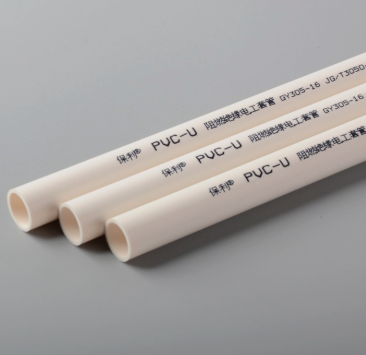
Which is better HDPE or PVC?
In the world of plumbing and infrastructure, selecting the right pipe material is a critical decision that can significantly impact the longevity, efficiency, and overall performance of your system. The article provides an in-depth analysis of the physical properties, installation and maintenance requirements, environmental impact, and lifecycle costs of both materials. Whether you are a civil engineer, municipal planner, or a homeowner, this guide offers valuable insights to help you make an informed decision.
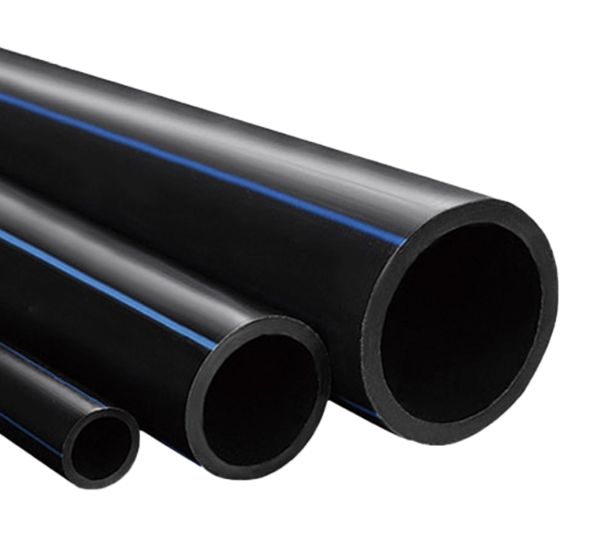
What is an HDPE pipe?
High-Density Polyethylene (HDPE) pipes have emerged as a cornerstone in modern pipeline systems, offering unparalleled flexibility, strength, and sustainability for fluid and gas transportation across industries.
CONTACT
Get in Touch With Us