
Introduction
When carrying out home renovation, plumbing stands as one of the most critical hidden‑work projects inside a house. Hidden inside walls, under floor slabs or above ceilings, household water pipelines cannot be easily replaced after decoration completion. Poor pipe selection or unqualified construction will trigger frequent water leakage, pipeline scaling, equipment corrosion and other troubles, bringing high‑cost maintenance and renovation work for homeowners. Therefore, choosing reliable water supply pipes directly determines household water safety, long‑term service life and later‑stage maintenance expenditure.
Against this background, PPR‑AL‑PPR composite pipe gradually gains popularity in high‑quality residential renovation. Evolving from conventional single‑layer PPR pipe, this composite product adopts a special three‑layer “PPR‑Aluminum‑PPR” structure, integrating the merits of plastic polymer and metal aluminum barrier material. Many homeowners and installers still remain unclear about its real value inside residential spaces. This article will break down its structural features, typical household application scenarios, construction precautions and practical purchasing advice, offering clear reference for both property owners and plumbing technicians.
Core structural characteristics of PPR‑AL‑PPR composite pipe
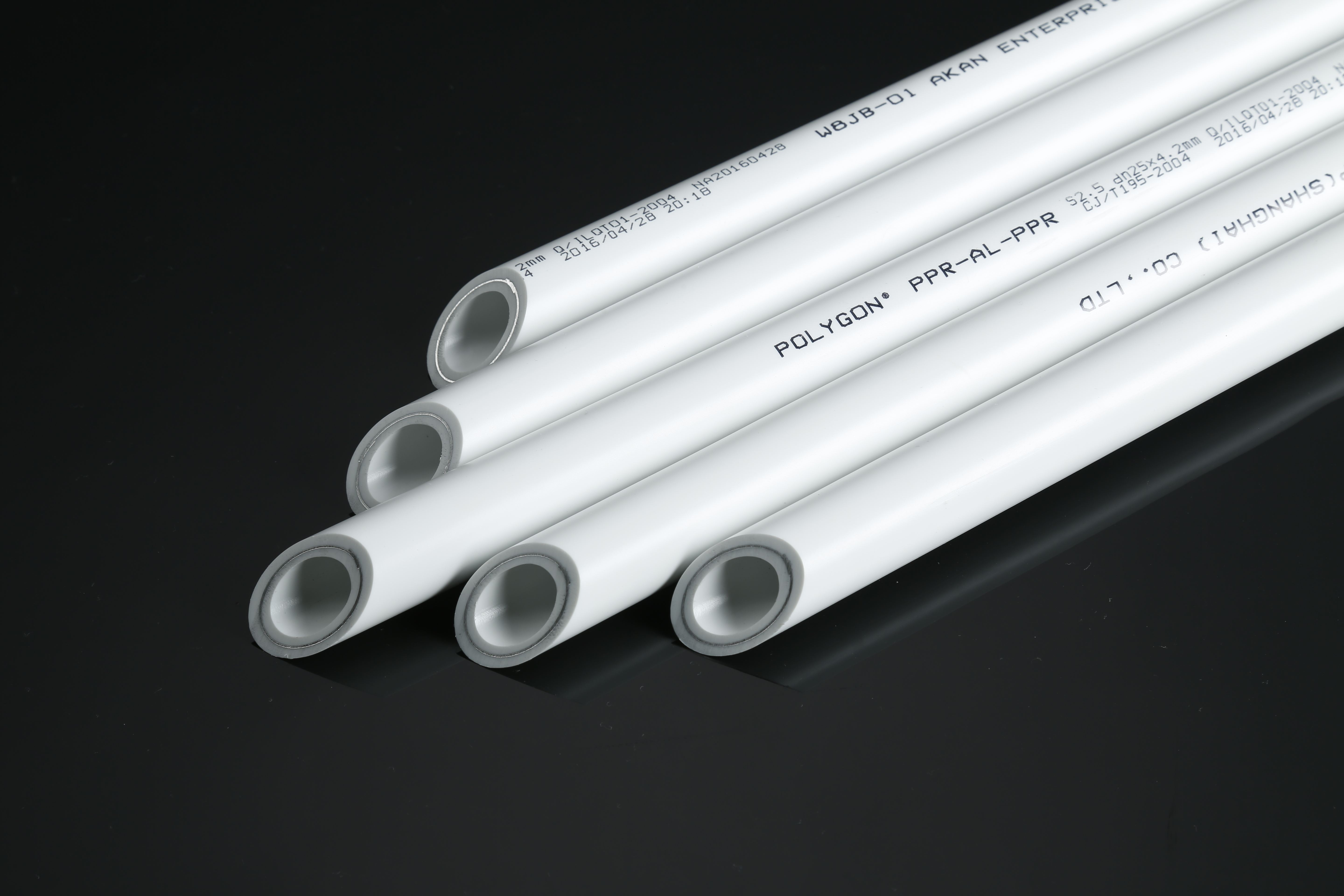
Different from homogeneous single‑layer PPR pipes, PPR‑AL‑PPR composite pipe is built with three tightly bonded functional layers: inner hygienic PPR layer, middle aluminum barrier layer, and outer PPR protective layer. The inner PPR layer directly contacts running tap water; it is non‑toxic and hygienic, just like standard PPR material. The outer PPR layer offers mechanical protection against scratches and outdoor minor impact damage during transportation and installation.
The real performance improvement comes from the sandwiched aluminum layer. This metal barrier brings three core upgrades for household plumbing systems. First, it delivers excellent oxygen‑barrier and light‑shielding capability. It blocks sunlight penetration and prevents oxygen molecules from permeating into water circuits. Second, the aluminum layer reinforces overall pipe rigidity and mechanical strength, lifting pressure‑bearing performance compared with ordinary single‑layer PPR. Third, the embedded metal layer can be detected by common pipeline locators. After walls are closed and floors are tiled, maintenance workers can trace buried pipe routes without destructive chiseling.
Meanwhile, PPR‑AL‑PPR composite pipe still reserves the outstanding strengths of traditional PPR products. It adopts hot‑melt fusion welding technology for connection. Qualified raw materials contain only carbon and hydrogen elements without toxic components, fully satisfying drinking‑water transportation requirements for daily households.
Typical household application scenarios in home decoration
Thanks to its unique structural strengths, PPR‑AL‑PPR composite pipe shows prominent advantages in several key home‑renovation positions.
First of all, it performs excellently for whole‑house hot‑water pipelines. Hot‑water lines running toward kitchens, shower rooms and wash basins constantly transfer high‑temperature water. Thanks to low thermal conductivity of the aluminum barrier layer, composite pipes reduce heat dissipation along pipelines. Less heat loss means better energy efficiency and lower long‑term household energy bills.
Secondly, it is highly recommended for connecting pipes of floor heating systems and radiators. Oxygen penetrating into heating loops will cause gradual oxidation and rusting of boilers, circulating pumps and metal heating fittings. The aluminum oxygen‑barrier layer of PPR‑AL‑PPR effectively cuts off oxygen infiltration, protecting expensive heating hardware and extending the whole heating‑system service life.
Thirdly, it fits wall‑embedded concealed pipelines. After tiling and wall finishing, pipe routes become invisible. With detectable aluminum inside, plumbers can quickly locate pipeline paths and pinpoint leakage spots using metal detectors, avoiding large‑area wall breaking during later troubleshooting.
Besides, it works well for solar‑water‑heater connecting pipes on balconies. Solar devices produce frequent temperature swings and relatively high working pressure; composite pipes can cope with such fluctuating working conditions steadily.
It is worth noting that composite pipes are premium‑grade solutions, not mandatory for every water‑supply position. For cold‑water branches with simple working conditions, standard single‑layer PPR can still meet basic household demands. Homeowners can allocate budgets reasonably: prioritize composite pipes for hot‑water circuits and heating‑related pipelines, while applying ordinary PPR for regular cold‑water branches.
Installation & construction notes for home decoration
Although PPR‑AL‑PPR shares hot‑melt welding technology with standard PPR pipes, installers need to observe extra specifications to avoid damaging the intermediate aluminum barrier layer.
The fusion welder shall be heated and stabilized at standard 260℃ before operation. Over‑heating for too long will melt and destroy the aluminum layer inside, ruining its oxygen‑barrier and mechanical advantages. Operators should complete pipe insertion within the required time frame without rotating pipes or fittings during fusion connection.
For concealed laying inside walls or under floors, sharp bending is strictly forbidden. Sharp bends will create internal separation between aluminum and PPR layers and generate hidden leakage risks. Professional bending accessories shall be adopted when changing pipeline directions.
Project teams must select matching original brand fittings instead of miscellaneous spare parts. Mismatched accessories will cause unreliable fusion joints. Upon pipeline installation completion, standardized pressure testing is indispensable. Keep the pressure test running to check joint tightness before sealing walls and laying floor tiles.
For homeowners, try to avoid drilling or nailing randomly on walls where water pipes are buried. Keep basic maintenance records including pipeline layout drawings for future repair demands.
Selection guidance & conclusion
When selecting PPR‑AL‑PPR composite pipes for home renovation, homeowners should focus on three major points. First, confirm nominal pressure grades according to actual usage. Second, verify authoritative international product certifications such as CE, DVGW, ISO 9001, which prove stable product quality. Third, purchase products from formal and reliable suppliers, reject cheap counterfeit goods with inferior composite bonding.
This composite pipe is especially suitable for families equipped with floor heating / radiator heating systems, solar water heaters, and groups who attach great importance to long‑term pipeline safety and convenient later maintenance.
To sum up, PPR‑AL‑PPR composite pipe represents a premium hidden‑work choice for modern home decoration. It combines hygienic performance of PPR plastic and barrier functions of aluminum metal. Reasonable collocation between composite pipes and ordinary PPR helps homeowners balance safety, energy‑saving performance and renovation budget, creating stable and safe domestic water‑supply systems.
Related Articles

PPR Fiber Pipe vs Others: Choosing the Right Pipe for Real Projects
Most buyers start with a simple assumption: "PPR is PPR." Then they walk into a distributor's showroom and face four options on the shelf — Standard PPR, PPR Fiber Pipe, PPRCT, and PPR Aluminum. The price gap can be twofold, yet all claim to be "upgraded." So which one actually earns its premium?PPR

Polygon to Showcase Piping & Ventilation Systems at Aquatherm Almaty 2026
Polygon to Showcase Piping & Ventilation Systems at Aquatherm Almaty 2026 The 18th edition of Aquatherm Almaty 2026 – the leading international exhibition for heating, water supply, sanitary, air-conditioning and ventilation equipment in Central Asia – will take place from September 2 to 4, 2026 at

PPR Composite Pipe: Performance, Advantages & Full Product Comparison
1. IntroductionIn modern high-standard plumbing and water supply projects, ppr piping material is the most trusted solution for residential and commercial water systems. Among all ppr products, the 3-layer PPR composite pipe stands out as an upgraded and enhanced plastic ppr and ppr plastic pipe, pe

PPR Pipe Installation Essentials: A Step-by-Step Guide for Reliable Plumbing
IntroductionWhen planning a home renovation, proper installation of PPR pipes is just as important as choosing the right material. Even the highest quality pipes will fail if the installation is flawed. This guide covers the critical details of PPR pipe installation, with special attention to PPR Pi

Application Scenarios of PPR Series Water Supply Pipes | Complete Usage Classification
1. IntroductionModern water supply and plumbing projects require reliable, safe, and environment-adaptive piping materials to ensure long-term stable water delivery. As mainstream ppr piping material in the construction industry, Polygon full-series PPR products cover four core categories: standard

How PPR Pipes are Classified?
Introduction PPR pipe, short for Polypropylene Random Copolymer pipe, is manufactured with polypropylene random copolymer as the core raw material. It belongs to thermoplastic plastic pipelines specially developed for cold and hot water transportation. As one of the most mainstream water supply pipe
CONTACT
Get in Touch With Us