




I Product Introduction
UPVC drainage fittings are precision-injection-molded components manufactured from high-quality rigid polyvinyl chloride resin. Designed as complementary connection elements for UPVC pipe systems, our product line encompasses elbows, tees, couplings, traps, and all essential fitting types. These components utilize solvent cement socket bonding or rubber ring sealing methods to establish comprehensive building drainage networks. Each fitting features smoothly transitioned flow passages and exceptional chemical resistance. Widely implemented in residential wastewater systems, industrial effluent disposal, and rainwater collection networks, these fittings deliver reliable joint performance and extended service life to ensure uninterrupted drainage operation.
I Product Features
● Complete Size Coverage, System Integration: Our comprehensive product range includes 45°/90° elbows, equal/reducing tees, couplings, access fittings, traps, expansion joints, and pipe clips—meeting all connection requirements for building drainage systems while enabling one-stop procurement.
● Precision Molding, Secure Fit: Manufactured using high-precision molds and injection processes, with strict control over socket depth and internal diameter tolerances to ensure tight engagement with pipe spigots, preventing loosening and leakage after installation.
● Optimized Flow Path, Blockage Resistance: Smooth interior surfaces and gradually transitioned flow passages eliminate stagnation zones, significantly reducing flow resistance. Swept tees and large-radius elbow designs minimize debris accumulation and reduce clogging risks.
● Stable Material, Chemical Resistance: Excellent resistance to acids, alkalis, and other chemical media commonly found in drainage systems. Components remain rust-free and corrosion-proof, maintaining structural integrity without strength degradation or leakage over extended service life.
● Simple Installation, Reliable Joints: Solvent cement bonding enables rapid installation. Socket depths conform to standard requirements, and cured adhesive creates permanent connections that enhance overall system integrity.
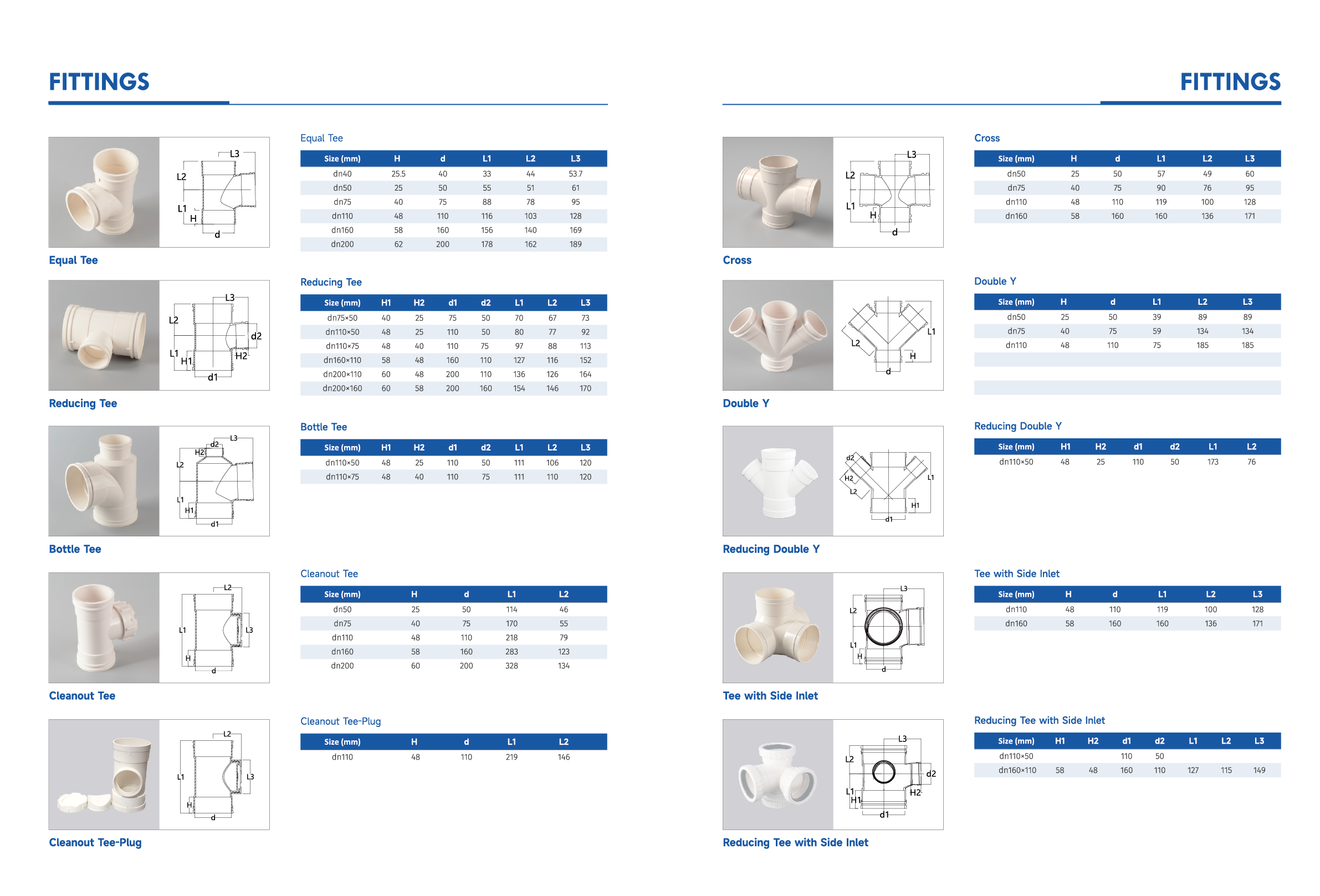
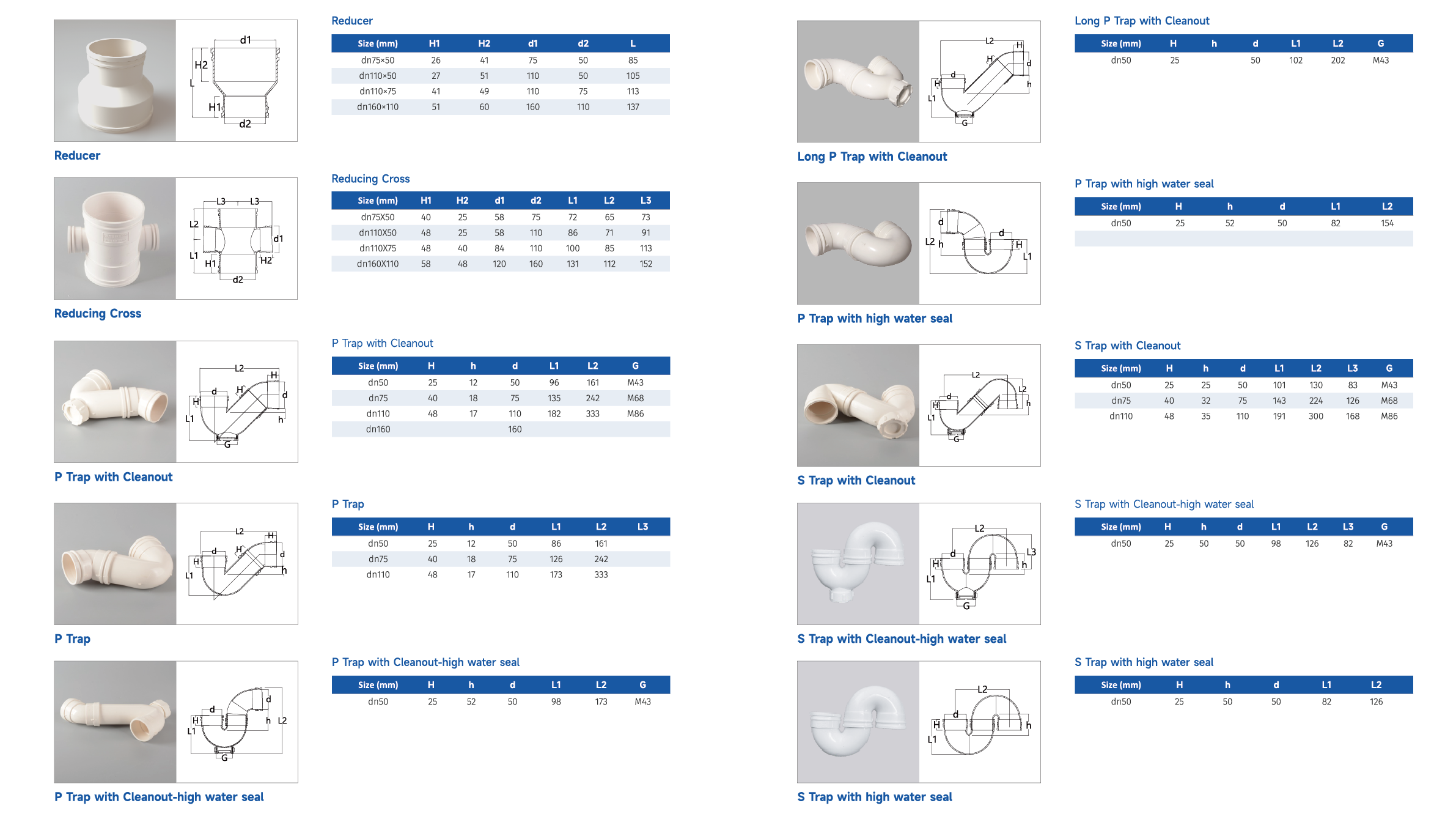
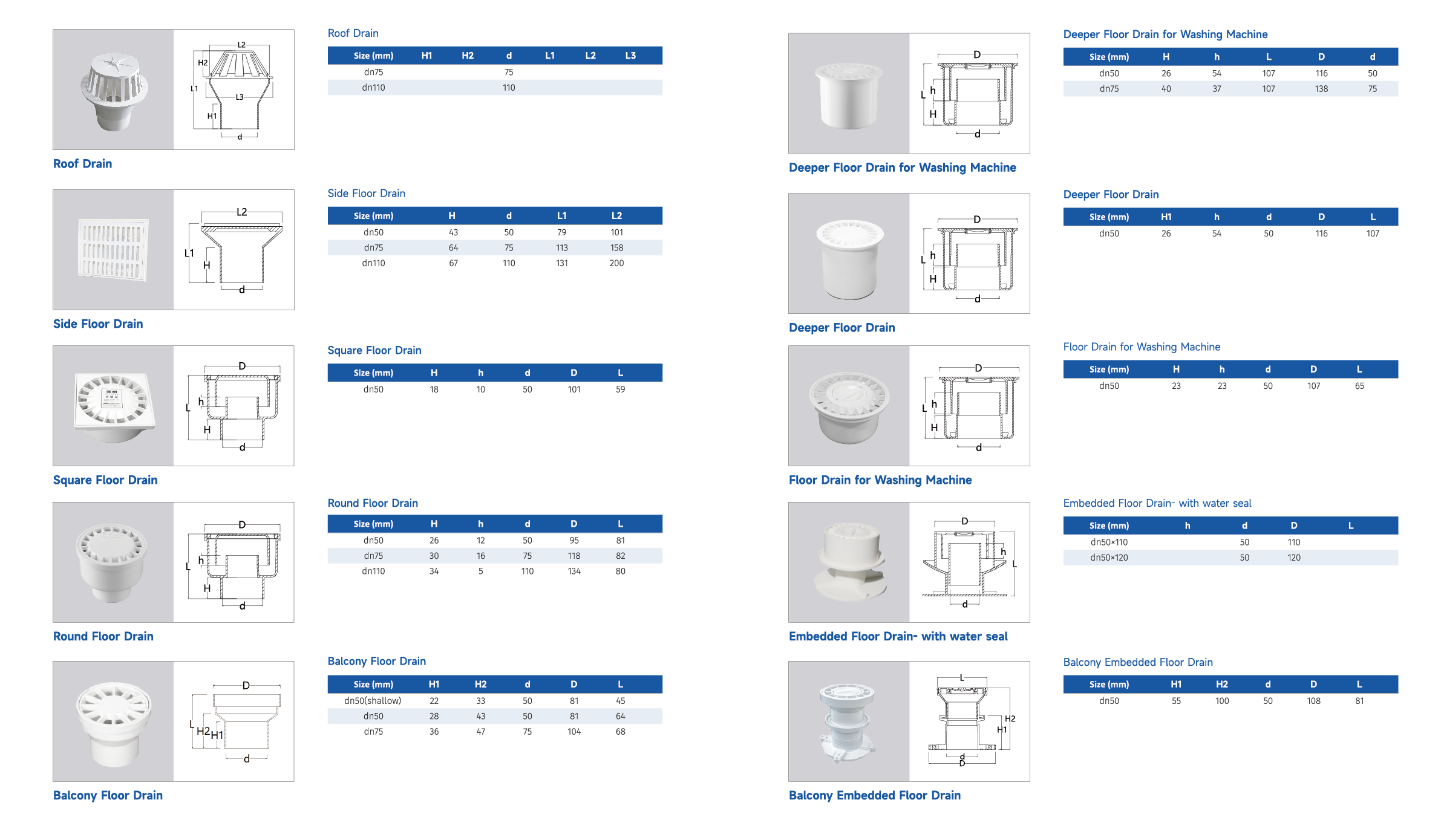
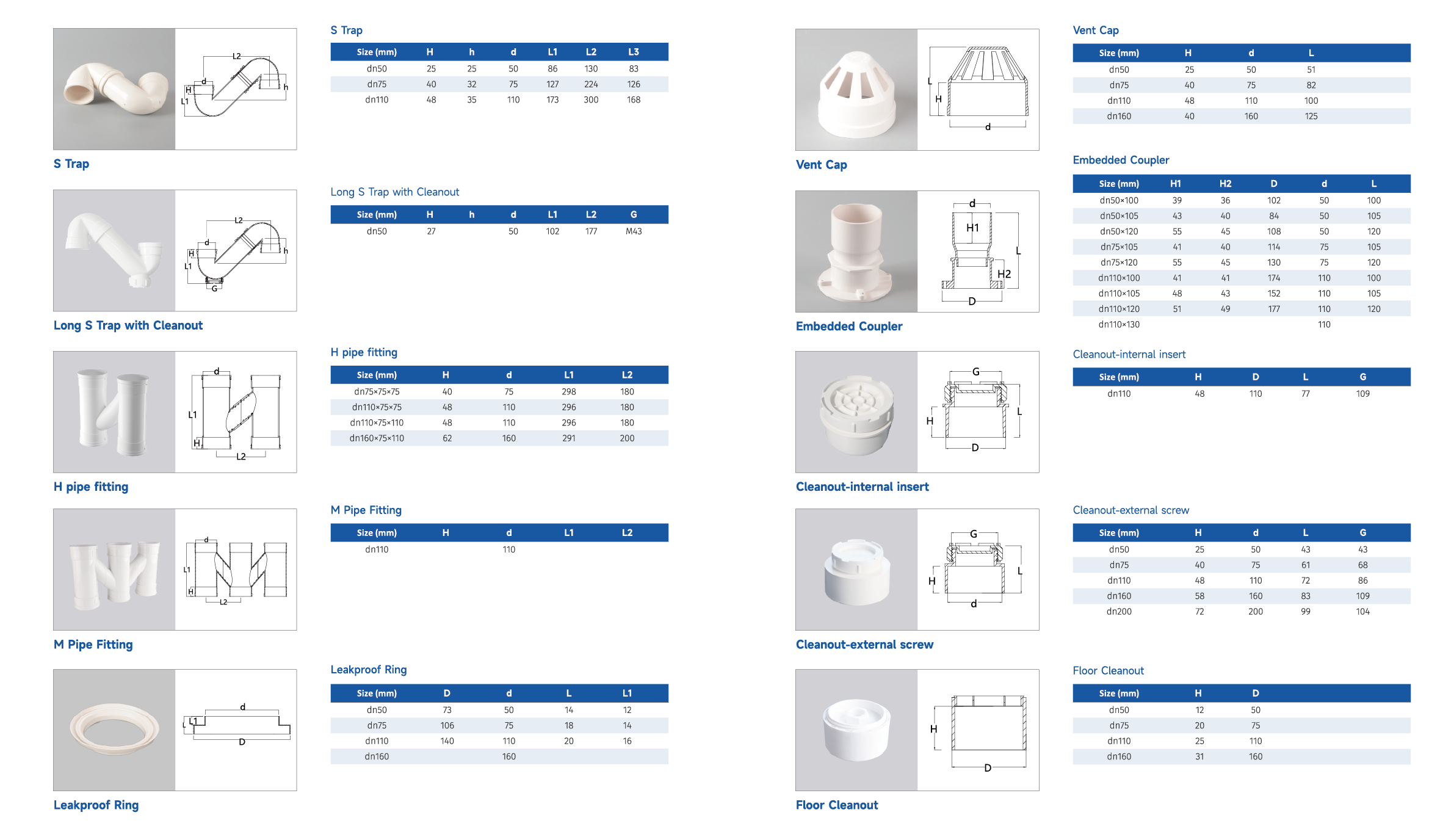
I Product Specification
I Comparison with Other Material Fittings
Comparison Aspect | UPVC Drainage Fittings | Cast Iron Fittings |
Connection Method | Solvent cement bonding, simple operation | Lead caulking, complex process |
Corrosion Resistance | Excellent, rust-proof and corrosion-proof | Poor, rust-prone, needs coating |
Interior Surface | Smooth, debris-resistant | Rough, scale accumulation |
Weight | Lightweight | Heavy |
Cost | Economical | Expensive |
Installation Time | Fast adhesive curing | Slow joint curing |
I Application
● Residential Drainage Systems: Used for interior soil and waste pipe connections in apartments, hotels, hospitals, schools, and other buildings.
● Rainwater Discharge Systems: Suitable for building downspouts and roof drain connections, suitable for exposed outdoor installation.
● Kitchen and Bathroom Drainage: For connecting sinks, wash basins, toilets, floor drains, and other sanitary fixtures to vertical stacks.
● Industrial Effluent Pipelines: Used in chemical processing, electroplating, and similar industries for conveying wastewater compatible with UPVC’s corrosion resistance.
● Same-Floor Drainage Systems: Compatible with same-floor drainage technology for horizontal branch pipe installation within bathroom sunken compartments.
I FAQ
1. What types of UPVC drainage fittings are available? How do I select the right ones?
Common types include: Elbows (45°/90° for directional changes), Tees (branch connections—available in equal, reducing, and swept configurations), Couplings (straight extensions), Expansion Joints (thermal movement compensation), Traps (water seal for odor prevention), Access Fittings (cleaning and maintenance), and Pipe Clips (support and fixing). Selection should be based on design drawings, considering pipe diameter, directional requirements, and functional needs.
2. What is the function of expansion joints? Are they mandatory?
They are mandatory. UPVC has a relatively high coefficient of thermal expansion. Temperature fluctuations cause pipe expansion and contraction. Expansion joints absorb these dimensional changes, preventing stress concentration that could lead to joint failure or pipe deformation. Code requires one expansion joint per floor on drainage stacks.
3. How can I ensure leak-free solvent cement joints?
Key factors include: ① Selecting fittings with properly matched socket-spigot clearance; ② Ensuring bonding surfaces are clean and dry; ③ Applying cement evenly without gaps; ④ Allowing sufficient curing time after insertion; ⑤ Installing expansion joints as specified to accommodate thermal movement.
4. What are your delivery times?
Stock items typically ship within 7 working days. Bulk orders require 15-25 working days depending on quantity. Specific quotations and schedules can be customized based on project requirements.


